Aspiring apprentices sign up and access our AI Interview Coach for FREE!
Choosing the Right Path, Not the Easiest One
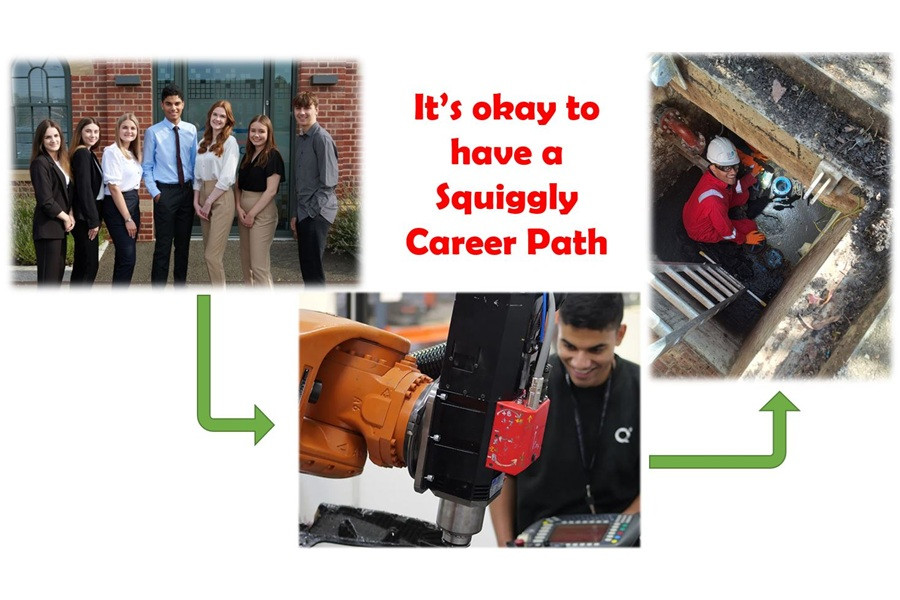
There’s a pressure when you’re starting out in your career to pick something that looks “right” on paper.
Stable. Impressive. Clear progression. No questions asked.
For me, that started with a Legal Apprenticeship.
At the time, it seemed like the sensible option. It was structured, respected and came with a clear professional image. But even early on, something didn’t feel right. I found myself sitting still for long periods, working through theory-heavy content and realising this environment simply didn’t bring out the best in me.
It wasn’t that I couldn’t do it.
It was that I didn’t want to live in it.
That’s an important distinction that I think most people ignore for too long.
I wasn’t energised by desk-based work or abstract problem solving in isolation. I wanted movement. I wanted real-world challenges. I wanted to physically see the outcome of the work I was doing rather than just reading about it or writing about it.
At the time, I didn’t have the language for that feeling. I just knew I was out of place.
And honestly, changing direction felt uncomfortable.
At that time, I genuinely felt like everyone around me had their future figured out while I was still questioning my own decisions. Watching other people seem confident and certain about their path made me doubt whether I was making the right choices by changing direction. Part of me worried that leaving one path to pursue another meant I was falling behind or failing in some way. At that stage in my life, it was difficult to see that changing course wasn’t a setback.
But looking back now, I realise changing direction was one of the best decisions I could have made.
Searching for More Through Robotics
My next step was Robotics.
On paper, it looked like the perfect pivot. Technical. Future-focused. Practical application of engineering principles. It gave me more of what I wanted: improving systems, problem solving and hands-on thinking.
And for a while, it worked.
I enjoyed understanding how systems operated and how engineering could solve real-world problems.
But over time, another realisation started to appear.
I could understand the concepts, but I didn’t yet have the deeper practical engineering foundation to fully bring them to life in operational environments. I was seeing the engineering, but not yet operating within it at the level I wanted to.
That gap frustrated me at first.
Then it became useful.
Because it forced me to ask myself a far more honest question:
Not “What am I interested in?”
But:
“What skills do I actually need to become capable in this environment?”
The Question That Changed Everything
That question led me into Maintenance Engineering through an apprenticeship at Anglian Water.
And this time, it wasn’t about trying something out.
It was about committing to a path where I could build real competence.
What stood out wasn’t just the role itself, but what it demanded every day:
· Practical decision-making in real environments
· Responsibility for critical infrastructure
· Constant variation in work and problem solving
· Learning that directly impacts operations, not theory
For the first time, I wasn’t just observing engineering, I was part of it.
I still remember moments early on where I realised this environment suited me far more naturally than the paths I had taken previously. Being out on site, working around experienced engineers, solving real problems and continuously learning gave me a sense of direction I hadn’t properly felt before.
That didn’t mean everything suddenly became easy.
There were still moments of uncertainty and plenty of situations where I realised how much I still had to learn. Starting in a technical environment can feel overwhelming at times because you’re surrounded by people with years of experience and knowledge
But instead of seeing that as intimidating, I slowly started seeing it as an opportunity.
Finding Purpose Through The Right Environment
One of the biggest things I’ve learned is that growth is never achieved entirely on your own.
The environment you work in, the people around you and the culture you learn within all shape the person you become.
I’ve been fortunate to be surrounded by people who invested time in me, shared knowledge, encouraged questions and pushed me to keep developing. Having a supportive manager and a mentor willing to share their experiences and guidance, as a way of them “giving back”, has made a huge difference to my confidence and progression so far.
When you’re starting out, having people who believe in your potential and challenge you to improve can completely change the trajectory of your career.
I’m equally grateful for the support from those closest to me outside of work (Mum, Dad and Bro).
Changing direction in life can feel uncertain, especially when you’re still figuring things out for yourself. In those moments, having people who believe in you before you fully believe in yourself becomes invaluable.
Instead of reinforcing doubt, they reinforced growth.
Instead of questioning the journey, they encouraged it.
That support gave me the confidence to keep moving forward, keep learning and keep trusting the process during periods where I didn’t yet have everything figured out.
Looking back now, this journey has been about finding purpose, staying curious and surrounding myself with people who inspire growth.
For that, I’ll always be grateful.
Lessons I’ve Learned Along the Way
Looking back, there are a few lessons that stand out more than anything else.
The first is that not fitting in isn’t failure, it’s information.
Early on, I treated misalignment like a problem. Like I was behind or had made the wrong choice.
But it wasn’t failure.
It was feedback.
It was showing me what didn’t bring out the best in me and helping me understand what kind of environment I actually wanted to build a future in.
Most people ignore that signal for too long because they think changing direction means starting over.
It doesn’t.
It means refining.
The second lesson is that interest alone isn’t enough. Capability matters.
Robotics interested me. Law made sense on paper. But neither truly clicked until I started asking myself:
“What skills do I actually need to operate at a high level in this space?”
I stopped focusing only on what sounded good and started focusing on building practical competence, learning from others and developing skills that would allow me to grow long term.
That question shifted me from exploring careers to building one.
I’ve also learned that you don’t magically “find” the right path overnight.
You build towards it.
You move, you learn, you adjust and you pay attention to what fits and what doesn’t. Most of the time, the path only becomes clear after you’ve taken a few wrong turns and learned from them.
Be Like a Sponge: The Best Advice I Can Give
One of the biggest pieces of advice I’d give to anyone starting out is this:
“Be like a sponge.” I am not taking credit for this one though. Mark Hounslow if your reading this thanks for this advice it has truly stuck with me.
Absorb everything you can from the people around you, especially those with experience. Listen more than you speak. Ask questions. Stay curious. Every environment, every role and every person has something to teach you if you’re willing to take it in.
The people who grow fastest are usually the people most willing to learn.
Don’t rush to choose a “forever” path either.
Pay attention to what drains you.
Pay attention to what energises you.
And don’t ignore either of them.
Try things properly. Not halfway. Fully commit, learn everything you can, then be honest with yourself about whether it fits.
And if it doesn’t, never treat it as wasted time.
It’s data.
It’s feedback.
It’s direction.
Building a Career That Actually Fits You
Looking back, I’m grateful I stopped trying to force myself into a path that simply looked good on paper and started paying attention to the kind of work and environment that genuinely brought out the best in me.
The safest-looking path is not always the right one for you.
Build skills. Build awareness. Build resilience. Surround yourself with people who challenge you in the right way and environments that help you grow.
Because the goal was never to have your entire future figured out at 18.
The goal is to keep learning, adapting and moving toward work that gives you purpose, challenges you to improve and brings out the best version of who you are.
You won’t always get it right first time.
I certainly didn’t.
But every wrong turn teaches you something useful if you’re willing to learn from it.
And sometimes, the path that looks uncertain in the beginning ends up becoming the one that changes your life the most.
Saish Wilcox
Maintenance Tech Apprentice | Passionate About Promoting Apprenticeships | Member of the AAN | EmIWater
You can find out more and connect with Saish on LinkedIn.
Find Your Dream Apprenticeship!
Placer Apprenticeships connects the best apprenticeships with top talent.
You can find your dream apprenticeship in three ways:


Your AI Assistant
Chat with our AI to help you find matching opportunities and also answer any questions you have about apprenticeships.

Listings Search
Explore apprenticeship openings in all occupations and set up alerts for new opportunities delivered to your inbox.

Interactive Map
See a map of the UK with pins for all live apprenticeships, helping you zone in on matching locations and occupations.