Aspiring apprentices sign up and access our AI Interview Coach for FREE!
From trying to catch up to becoming West Midlands Degree Apprentice of the Year
When I was in sixth form, I did not have some perfect career plan.
I studied Maths, Biology and Chemistry, and for a long time the obvious route seemed to be medicine. Coming from an Egyptian immigrant background, education was always taken seriously in my family. Medicine was respected, stable, and easy for people to understand. I understood why my parents wanted that for me.
But I kept feeling pulled in a different direction.
I liked problem-solving. I liked understanding how things worked. I liked the idea of building things that had a real impact. The problem was that I did not really know what that looked like as a career. I had no computer science A-level. I was not someone who had been coding since childhood. I did not have a huge portfolio or a GitHub full of projects.
So when I applied for a Software Engineering Degree Apprenticeship at Rolls-Royce, I was excited, but I was also stepping into something unfamiliar.
Looking back, that was one of the best decisions I have made.
Starting behind
When I joined the first Software Engineering Degree Apprenticeship cohort at Rolls-Royce, I felt behind almost immediately.
There were people around me who seemed more comfortable with coding, tools, workplace language and technical conversations. I was learning programming, university content, engineering standards and how to behave in a professional environment all at once.
I would sit in meetings hearing terms I did not fully understand yet, then go away and look them up later. I asked questions. I took notes. I studied outside work. I made mistakes and tried not to make the same mistake twice.
That period was uncomfortable, but it taught me something important: feeling behind does not mean you do not belong. Sometimes it just means you are at the beginning.
That mindset carried me through the apprenticeship.
Learning what engineering really means
My early placements changed how I saw software.
Before joining Rolls-Royce, I thought software engineering was mainly about writing code. In aerospace, I quickly realised that code is only part of the story.
One of my first projects involved inter-processor communication. I had to understand requirements, design the solution, implement it in C, test it, and present the work back. It was my first real exposure to safety-critical software engineering.
That project taught me that in aerospace, you cannot just make something work and move on. You need traceability. You need testing. You need reviews. You need evidence. You need to understand how one change might affect the wider system.
That level of discipline shaped me.
Later, I worked in controls software, contributing directly to software supporting an engine ground release. This was the point where I started to be trusted with more responsibility rather than just learning the environment.
One of the key pieces of work I led was a large-scale Polyspace static analysis across multiple components. I was responsible for running the analysis, reviewing the findings, and then working directly with component owners to understand and challenge results. This meant having technical conversations about whether issues were genuine defects, how they should be fixed, or whether they could be safely justified before release.
That experience marked a shift for me. I was no longer just trying to understand how the engineering environment worked. I was actively improving it, taking ownership of work that influenced release decisions and helping ensure software quality in a safety-critical context. That was a big confidence step because it showed me I could contribute meaningfully, not just learn in the background.
Finding cybersecurity
Cybersecurity became a major part of my journey.
At first, it started through curiosity. I got involved in Capture the Flag competitions, including an industrial control systems cybersecurity competition at the University of Bristol. I placed third in that first event, which surprised me because I still felt new to it.
From there, I kept going.
I later won a global Rolls-Royce Capture the Flag competition and helped found and captain the Rolls-Royce Global CTF team and community. That mattered to me because cybersecurity can feel closed off from the outside. I wanted to make it easier for other people to start, so I helped create guidance for beginners on things like Linux setup, tools, and how to approach challenges.
Eventually, cybersecurity became more than a side interest. During my Product Security placement, I led the development of a Preliminary System Security Risk Assessment for a next-generation aerospace processor. That involved analysing architecture properties, building a threat catalogue using MITRE EMB3D, mapping threats to assets and interfaces, and producing traceable documentation to support security assurance.
That experience helped me find the area I am most interested in now: the overlap between cybersecurity, embedded systems and safety-critical engineering.
From catching up to being recognised
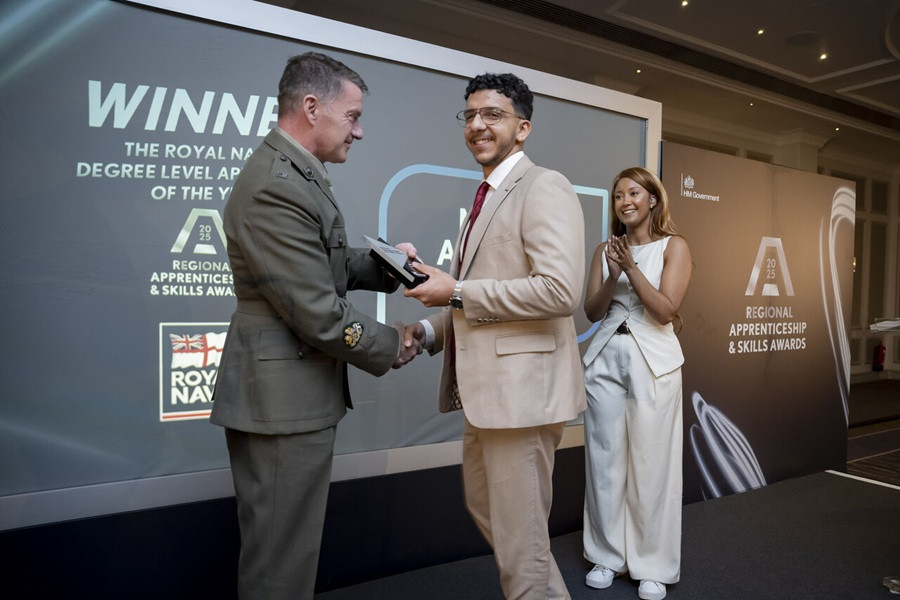
After completing my second year, I was named West Midlands Degree Apprentice of the Year at the National Apprenticeship Awards. I also received Highly Commended nationally and became a finalist at the Multicultural Apprenticeship Awards.
I am proud of that, but I do not say it because everything was smooth.
It was not.
Those awards came after long days, self-doubt, technical setbacks, awkward learning moments and a lot of catching up. They came after choosing to stay consistent when I felt out of place.
That is why the recognition meant so much. It was not just a nice title. It proved to me that where you start does not have to define where you end up.
I went from having no coding background to working on software and cybersecurity projects in aerospace. I went from feeling behind to being recognised as the best degree apprentice in the West Midlands and one of the top degree apprentices nationally.
That still feels a bit mad to say, but it is also why I think the story is worth sharing.
Going back to where it started
Recently, I returned to Finham Park Sixth Form, where I studied before joining Rolls-Royce.
This time, I was not there as a student. I delivered a two-hour apprenticeship and early careers workshop to Year 12 students.
I covered what apprenticeships and degree apprenticeships actually involve, where to find opportunities, how to structure a CV, how to use the STAR method, how to prepare for interviews and assessment centres, and the common mistakes people make when applying.
I did not want it to be a vague motivational talk. I wanted students to leave with something useful.
When I was in sixth form, I did not have a clear route into software engineering. I know how confusing it feels when people tell you to “stand out” but do not explain what that means. So I tried to give them the kind of practical guidance I wish I had earlier.
The feedback from the session was excellent, and the school has already discussed inviting me back for future activities. That is something I want to keep building.
My advice if you are still applying
If you are still trying to get your first job or apprenticeship, I know it can feel draining.
You might send applications and hear nothing back. You might compare yourself to people online and feel like everyone else is ahead. You might think you need a perfect background before applying.
You do not.
My advice is simple.
Start before you feel ready. Your first application probably will not be perfect. That is fine. You improve by doing it.
Be specific. Do not just say you are hardworking or passionate. Show examples of when you solved a problem, learnt something difficult, helped someone, led something, or kept going when it would have been easier to stop.
Ask for help. Get your CV reviewed. Speak to apprentices. Message people respectfully. Use the people around you.
Most importantly, do not count yourself out too early.
I started with no coding background and a lot of uncertainty. I am now studying for my degree, working in software and cybersecurity at Rolls-Royce, leading technical communities and helping students who are where I once was.
It did not happen overnight.
It happened because I kept showing up, especially when I felt behind.
So if you are still searching, applying, getting rejected or wondering whether this path is for you, keep going.
One opportunity can change the direction of your life.
Mostafa Abdelshafy
Multi-Award Winning Degree Apprentice @ Rolls-Royce | Software Engineer | Cybersecurity & DevSecOps | Apprenticeship & Early Careers Workshop Speaker
You can find out more and connect with Mostafa on LinkedIn.
Find Your Dream Apprenticeship!
Placer Apprenticeships connects the best apprenticeships with top talent.
You can find your dream apprenticeship in three ways:


Your AI Assistant
Chat with our AI to help you find matching opportunities and also answer any questions you have about apprenticeships.

Listings Search
Explore apprenticeship openings in all occupations and set up alerts for new opportunities delivered to your inbox.

Interactive Map
See a map of the UK with pins for all live apprenticeships, helping you zone in on matching locations and occupations.